
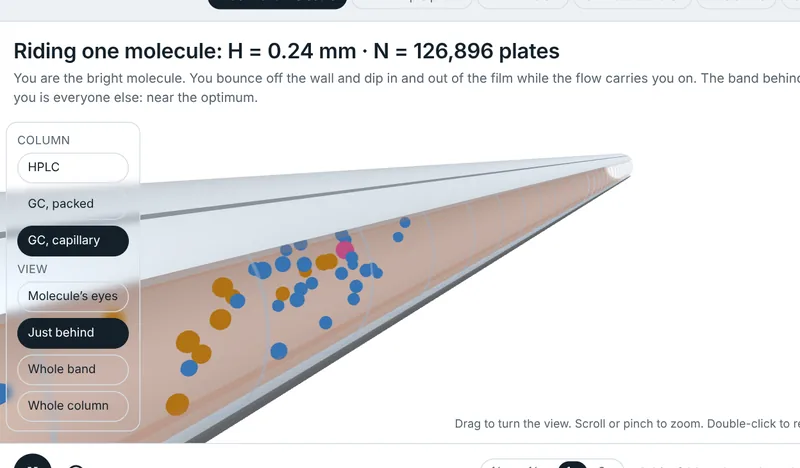
 Inside the Column (Van Deemter in 3D)Ride through the column as one molecule: weave between packing particles or bounce along a capillary wall, and see what multiple paths, diffusion and mass transfer each do to the band. A companion to the Van Deemter Explorer, which covers the same equation term by term.
Chemistry is easier to understand when you can see it.
HexaMole is a project to make chemistry education more visual, interactive, and approachable. Analytical chemistry and instrumentation can feel abstract; these tools let you explore what happens inside an instrument, draw molecules, and work with spectra instead of only reading about them.
The tools have been tested and reviewed to the best of my ability, but mistakes and glitches can still happen. Please check important results independently. For the best experience, use an up-to-date Chrome browser.
Featured tools
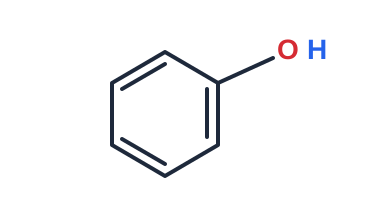 MoleCanvasDraw molecules, reactions and mechanisms.
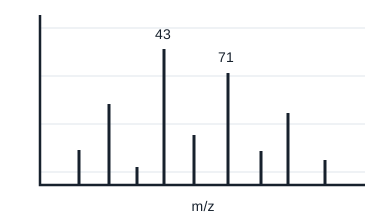 MoleSpectraPlot, edit and digitize mass spectra.
ChemGPT agentsAI chatbots for chemistry classroom activitiesComing soon
Interactive visualizations
Chromatography
Inside the Column (Van Deemter in 3D)Ride through the column as one molecule: weave between packing particles or bounce along a capillary wall, and see what multiple paths, diffusion and mass transfer each do to the band. A companion to the Van Deemter Explorer, which covers the same equation term by term.
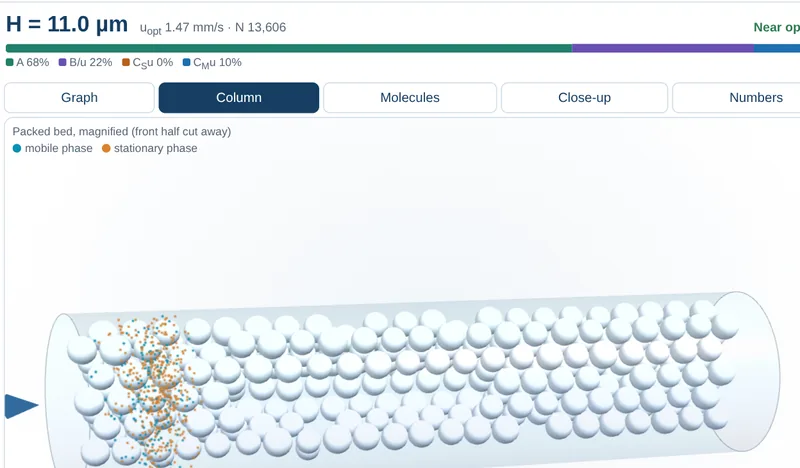 Van Deemter ExplorerChange the column and mobile-phase conditions to see what controls band broadening and the optimum linear velocity. The companion to Inside the Column: this one is for working with the equation and the numbers.
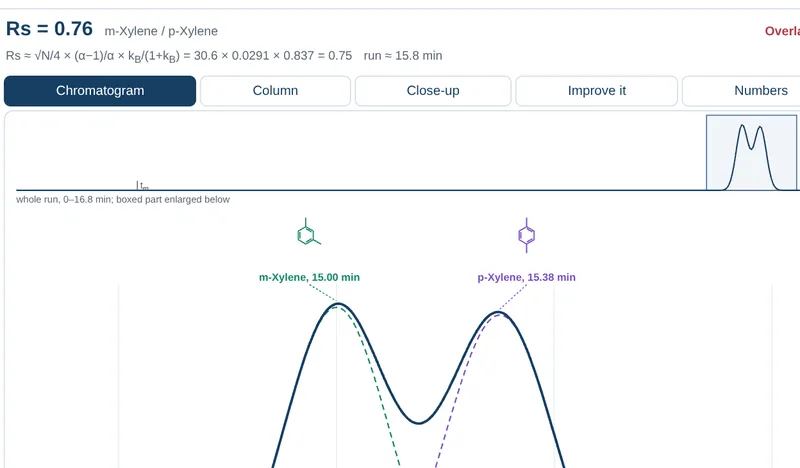 Chromatographic ResolutionExplore how column efficiency, retention, and selectivity affect the separation of two compounds.
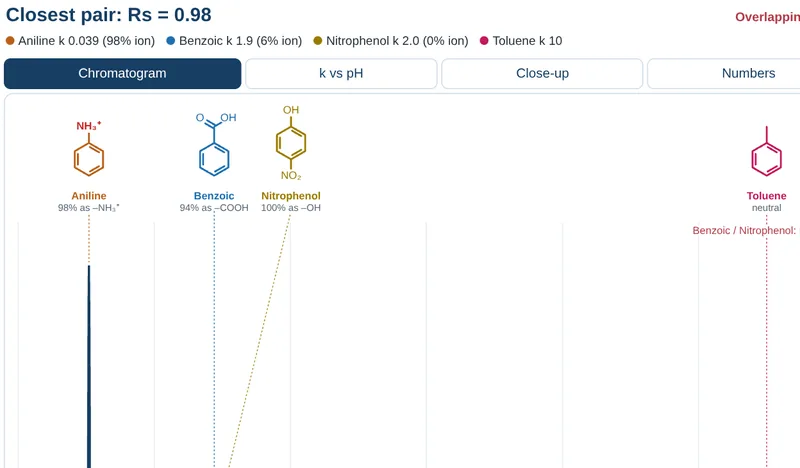 Retention and pH ExplorerSee how pH, pKa, and organic solvent content change retention in reversed-phase HPLC.
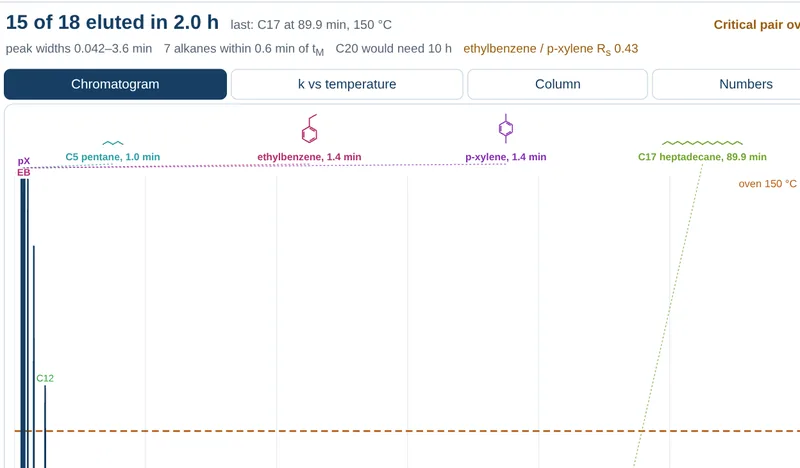 GC Temperature ProgrammingCompare isothermal and temperature-programmed GC to see how the oven program changes elution.
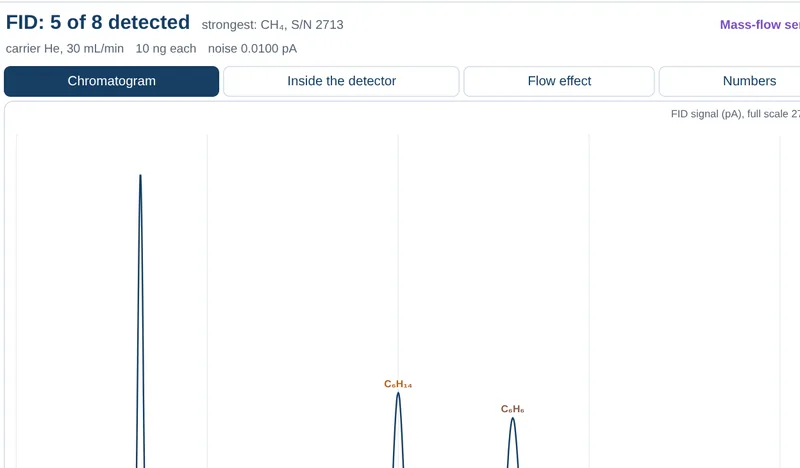 GC DetectorsCompare FID, TCD, and ECD responses and see why the same sample gives different detector signals.
Mass spectrometry
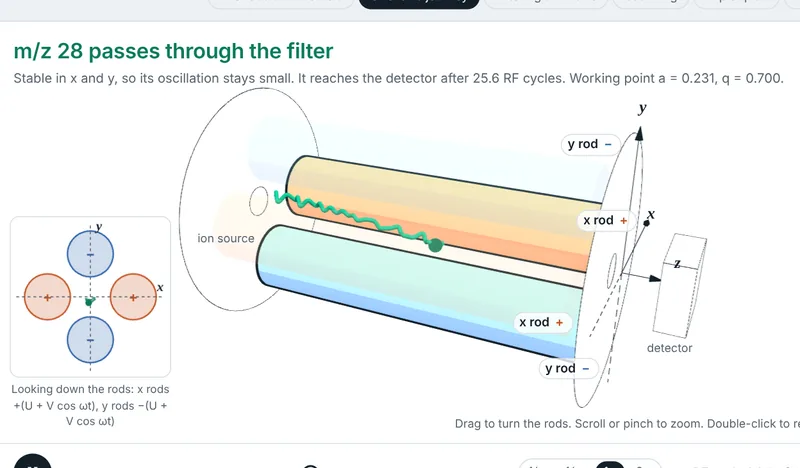 Quadrupole Mass FilterWatch ions weave through the rods and see why only one m/z survives the combined DC and RF fields, with the stability diagram alongside.
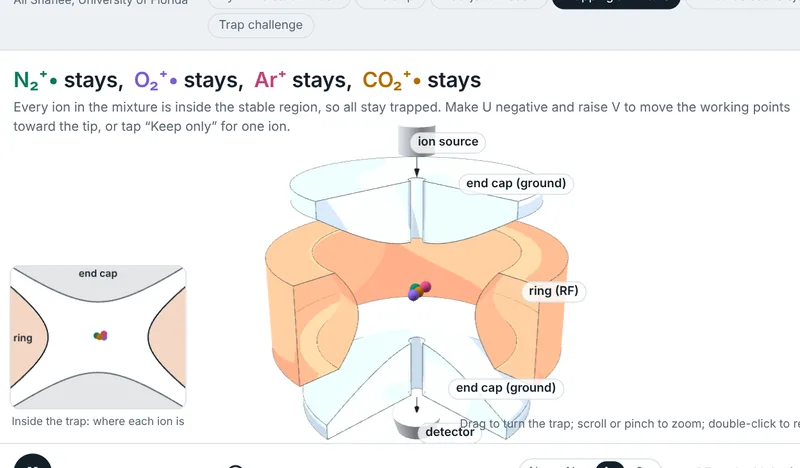 Quadrupole Ion TrapTrap ions in three dimensions, watch their figure-of-eight paths, then eject them in mass order and follow an MS/MS sequence.
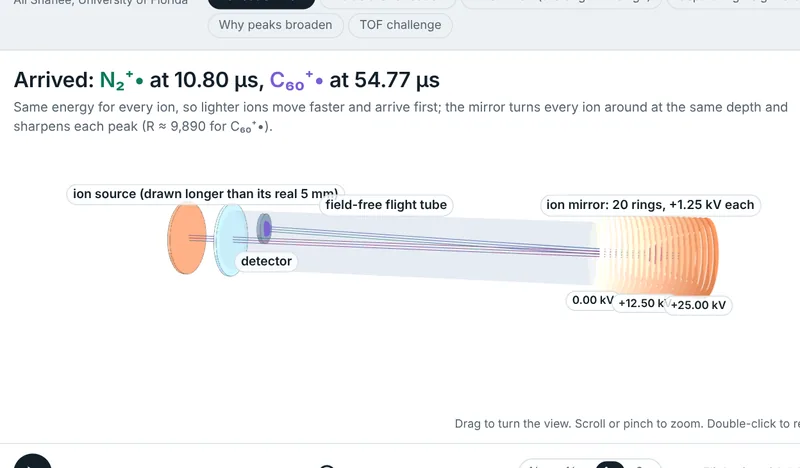 Time-of-Flight (TOF)Ions of the same energy separate by mass as they fly; see the reflectron fix the energy spread and sharpen the peaks.
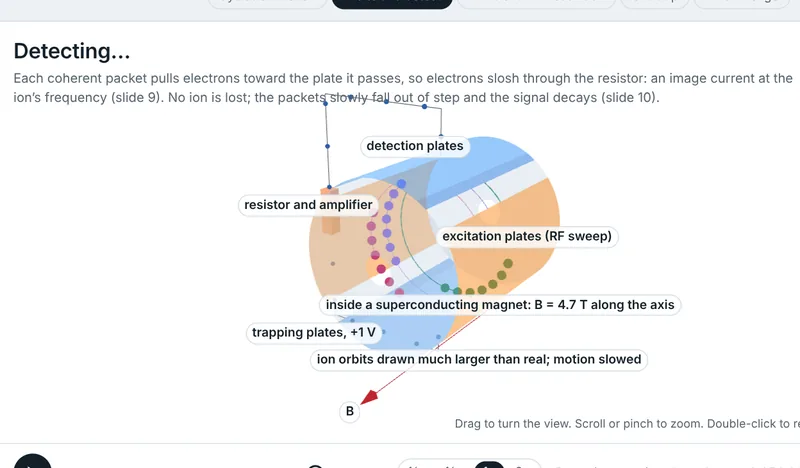 FT-ICR and OrbitrapIons circle or oscillate and induce a current; the Fourier transform turns that signal into very high resolution spectra.
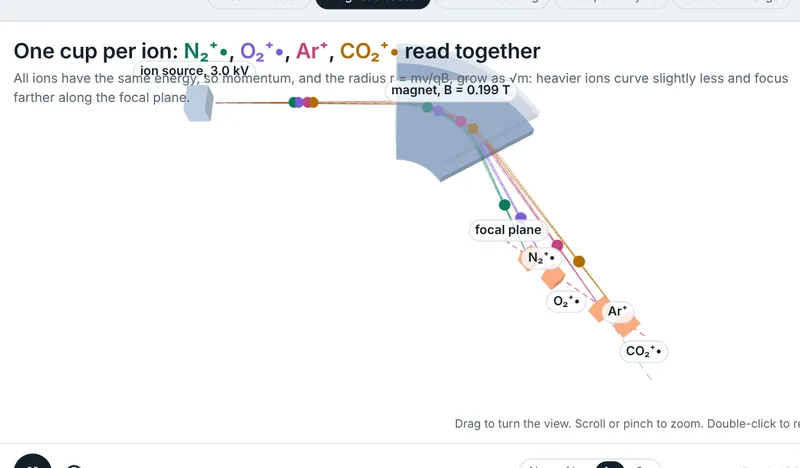 Sector Mass AnalyzersElectric and magnetic sectors separate by energy and by momentum; see how double focusing sharpens isotope measurements.
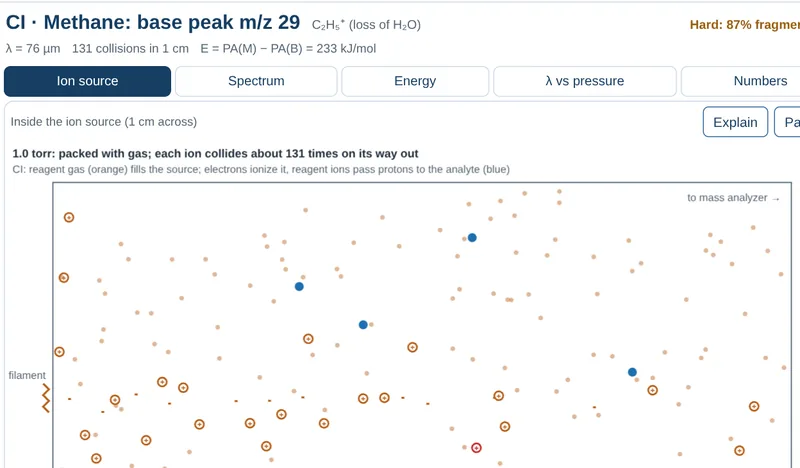 Ionization Explorer (EI vs CI)Change source conditions and reagent gases to understand electron and chemical ionization.
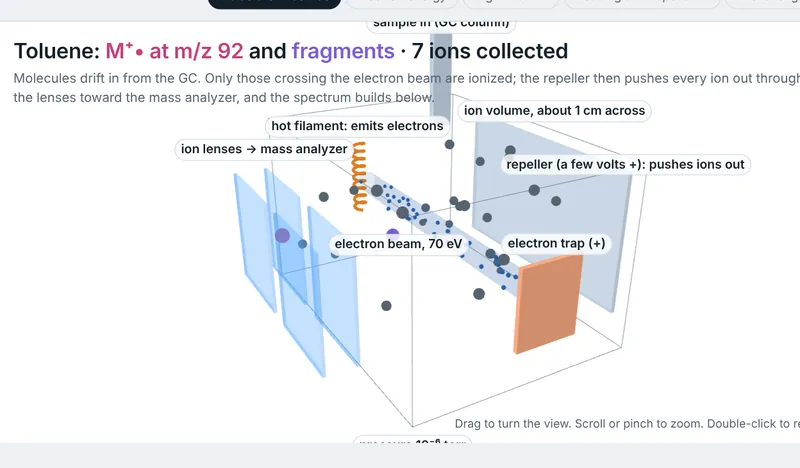 Electron Ionization (EI)Watch 70 eV electrons ionize molecules in the source, and see why the fragment pattern is a fingerprint and why high vacuum is essential.
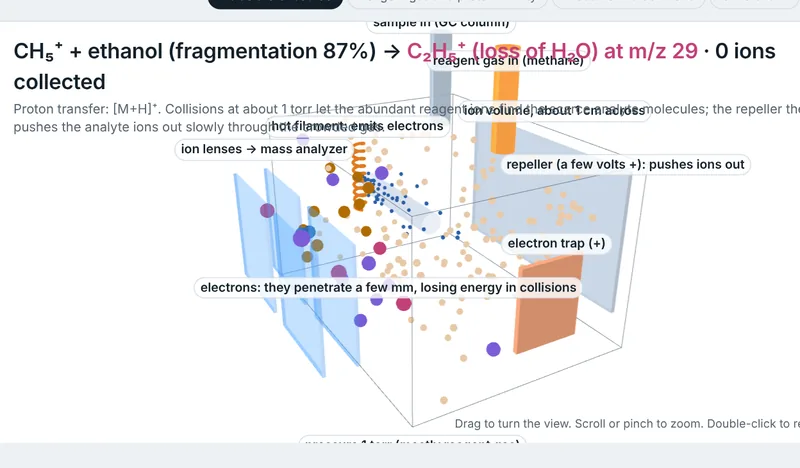 Chemical Ionization (CI)Choose a reagent gas and see how proton affinity sets the energy left in MH⁺, and how gently the molecule is ionized.
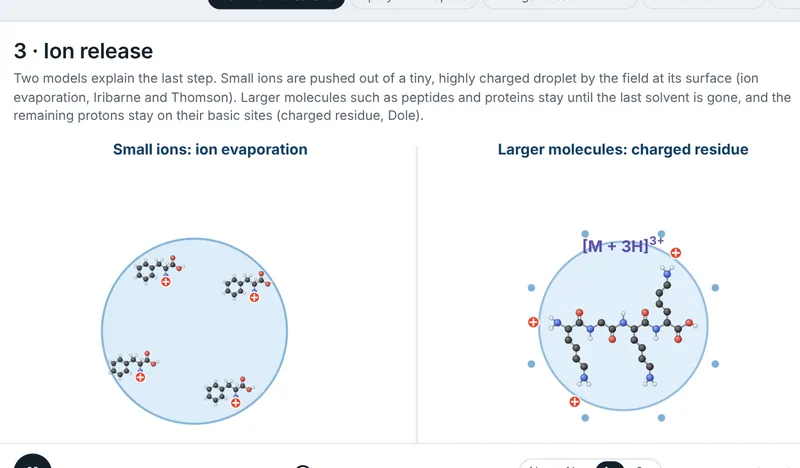 Electrospray Ionization (ESI)Follow the Taylor cone, shrinking droplets and ion release, then work out charge and mass from a charge-state envelope.
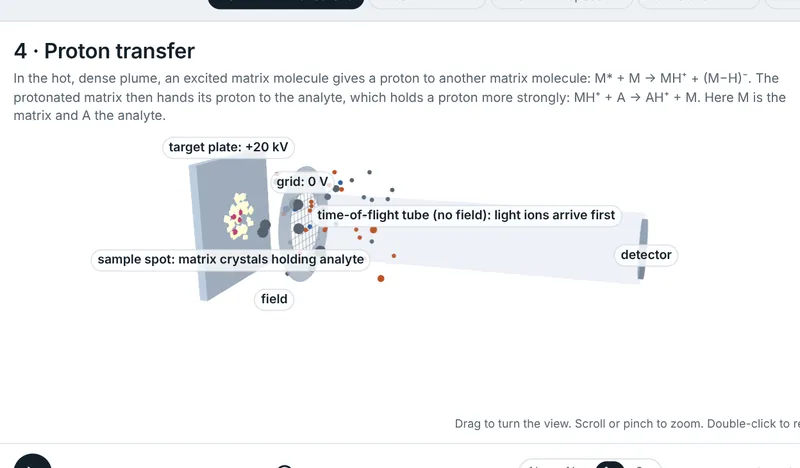 MALDIStep through the laser pulse, the plume and proton transfer, then see how laser energy and matrix choice change the spectrum.
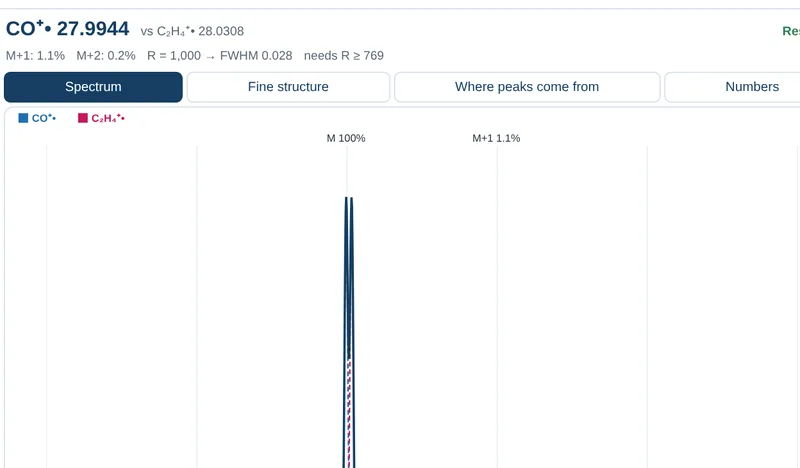 Mass Spectrum ExplorerExplore isotope patterns, resolving power, and electrospray charge states in small molecules and proteins.
SpectroscopyComing soon.
General chemistryComing soon.